Sewer Line Repair Services for Homeowners
Request an estimate from a local provider
Is something wrong with the pipe that carries waste out of your home? Slow drains, gurgling, bad smells and wet spots in the yard can all point to a damaged sewer line. This page explains what causes the trouble, how providers find it, and which repairs are common.
Horsessecure Plumbing is a referral service. We do not do the work. We connect homeowners in Quogue and the Quogue area with independent local providers who handle sewer line repair. You will also find typical U.S. price ranges, tips for gathering photos and notes, and questions to ask before you agree to anything. Ask, then compare, and get it in writing. Costs vary by job, so a written quote is always smart.
Is sewage coming up in your home right now?
If wastewater is rising in a tub, shower or floor drain, treat it as a real problem. It can carry germs, and it can spread fast across a basement floor.
Stay calm. A few simple steps protect your family while you line up help.
What should you do in the first few minutes?
Stop using water. That means no flushing, no laundry and no dishwasher. Every drop you send down has nowhere to go.
Keep kids and pets out of the wet area. Open a window if the smell is strong. If water is near outlets or a panel, stay away and leave the power alone until it is safe.
Snap photos first
Before you mop anything, take pictures. Capture the drain, the water line on the wall, and any damaged items. Add a short note with the date and what you noticed.
This takes two minutes. It helps a provider understand the problem and makes any insurance conversation easier.
How do you know a sewer line is failing?
The signs often start small. Watch for:
- Several drains slowing down at once
- Gurgling from toilets or floor drains
- Sewage smells in the yard or basement
- Soggy, extra-green patches on the lawn
- Sinking spots or cracks near the pipe path
One slow sink is usually a local clog. Trouble in many places at once points to the main line.
What damages sewer lines?
Older homes often have clay, cast iron or fiber pipe that wears out. Tree roots love the moisture and push into tiny joints. Over time they can block the whole pipe.
Shifting soil, heavy loads and past digging can crack or pull sections apart. Grease and wipes add to the trouble.
What does cold weather do to the pipe?
Cold winters bring freeze and thaw cycles. Wet soil expands, then settles again. That movement can bend joints and open small cracks.
Spring snowmelt and coastal storms add heavy water. Older lines in stone or block foundation homes may show problems during these wet stretches.
How do providers find the problem?
A good provider starts by asking questions. Where do you see the backup? Which drains are affected? When did it start?
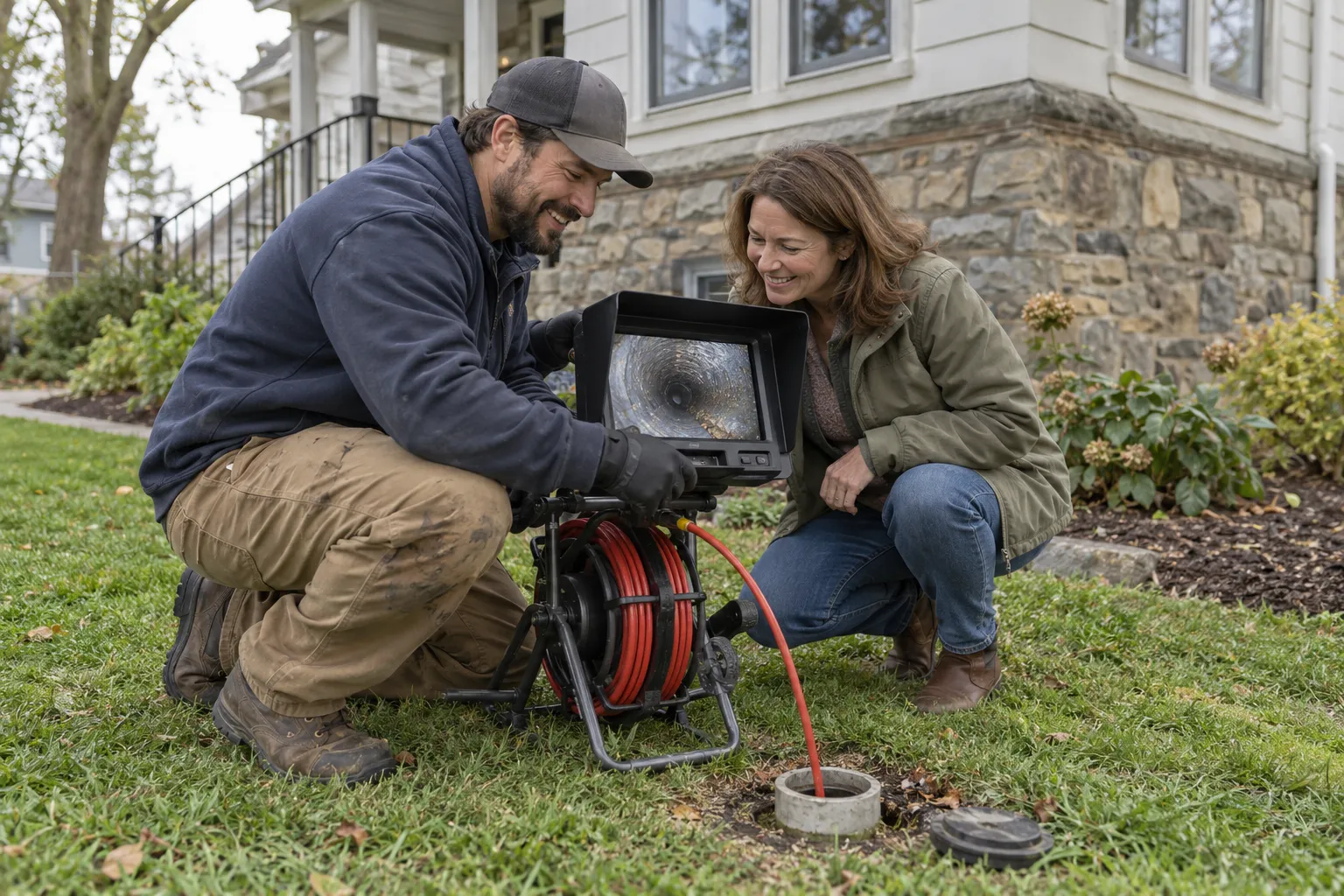
Then they usually run a small camera through the line. This shows breaks, roots, sags and blockages on a screen, so nobody has to guess.
Can a clog be cleared without digging?
Sometimes. Emergency drain clearing can open a blocked pipe so water flows again. Blocked pipe services may use a cable or water jet.
But if the camera shows a collapsed or cracked pipe, clearing is only a short-term fix. The damaged part still needs repair.
What are the repair options?
The right fix depends on what the camera finds. Common choices include:
- Spot repair: replacing one short, damaged section
- Pipe lining: a resin sleeve cured inside the old pipe
- Pipe bursting: pulling new pipe through as the old one breaks apart
- Full replacement: digging a trench and installing new pipe
Ask the provider why they picked their method. Ask what the other methods would cost, too.
Is trenchless repair always possible?
No. Trenchless methods need a pipe that is still fairly open and not badly collapsed. Deep bends or big sags can rule them out.
Trenchless work can mean less yard and driveway damage. Digging may still be the better choice for a badly failed line.
What drives the price?
Length, depth and access matter most. A short, shallow run under grass costs less than a deep line under a driveway or slab.
The method, the pipe material, the yard restoration and any permit fees also play a part. See the cost table on this page for typical ranges. Your quote may differ.
Do you need a permit?
Often, yes. Many towns require a permit and an inspection for sewer work. The provider usually handles the paperwork, but ask who is responsible.
Who owns which part of the pipe?
This surprises many homeowners. The pipe on your property is usually yours. The section under the street may belong to the town or utility.
If the break is near the property line, ask the provider to help you find out who is responsible.
What paperwork helps most?
Keep a simple folder. Include:
- Dated photos and short notes
- Camera inspection images, if the provider shares them
- Written quotes and receipts
- Any past plumbing records for the home
Some policies may cover sudden damage, but many exclude wear and tear. Check your policy. Providers can often help document damage for a claim.
What should you ask the provider?
A few questions make the quote clearer:
- What exactly caused the problem?
- Which repair method do you suggest, and why?
- Does the price include permits and yard cleanup?
- What could change the price once work begins?
- Is there a written warranty on the work?
Get it in writing before work starts.
How do you compare quotes?
Line them up side by side. Check the method, the length of pipe, the cleanup and the permit costs. A low number that leaves out cleanup may end up costing more.
Ask, then compare. You are allowed to take a little time, as long as water use is stopped.
What's Included
Camera Inspection
A small camera shows the pipe's real condition, so the repair plan is based on what is actually there.
Spot Repairs
One broken section can sometimes be replaced without redoing the whole line from the house to the street.
Lining or Bursting
Trenchless options can renew an old pipe with less digging, when the pipe's condition allows it.
Full Replacement
When the line is badly collapsed, providers may dig a trench and install new pipe from end to end.
What Sewer Line Repair Typically Costs
Sewer work varies a lot with pipe length, depth and access. These are typical U.S. ranges, not quotes. Prices differ by region and job, so always get a written quote before work starts.
| Item | Typical range | Notes |
|---|---|---|
| Camera inspection | $150 – $500 | Some providers apply it toward the repair |
| Clearing a main line blockage | $200 – $600 | Roots or grease; may return if the pipe is damaged |
| Spot repair of one section | $1,000 – $4,000 | Depends on depth and ground access |
| Trenchless pipe lining | $3,000 – $10,000 | Needs a pipe that is still fairly open |
| Pipe bursting | $4,000 – $12,000 | Replaces the old pipe with fewer digging zones |
| Full trench replacement | $5,000 – $25,000 | Longer, deeper lines and hard surfaces cost more |
How It Works
Stop the Water
Hold off on flushing, laundry and dishes, and keep people and pets away from any sewage.
Snap and Note
Take dated photos and jot down which drains are affected and when it began.
Request an Estimate
Send your details through the request form, or Request a callback to check provider availability.
Compare Written Quotes
Review the method, cleanup, permits and total price before you pick a provider.
Why Call Horsessecure Plumbing
Clear Costs Up Front
Learn what drives the price before you talk to anyone, so quotes make sense.
Independent Providers
Providers in our network are separate local businesses, and you choose who you hire.
Paperwork Ready
Simple tips for photos, notes and records help you stay organized for estimates and any claim.
Plain Answers
Short, friendly explanations help you ask good questions and compare quotes with confidence.
Other Services
Need sewer line repair services in Quogue?
- Request an estimate in a few minutes
- Independent local providers in our network
- Clear cost ranges explained up front
- No obligation to accept a quote
Sewer Line Repair Services FAQ
How much does it cost to repair a sewer line?
Most U.S. homeowners see anything from a few hundred dollars for clearing to well over $10,000 for full replacement. Length, depth, method and cleanup all matter, so get a written quote for your exact job.
How do I know if my main sewer line is broken or just clogged?
If several drains back up at once, or the problem returns soon after clearing, the main line may be damaged. A camera inspection can show whether it is a clog, roots or a break.
Will homeowners insurance pay for sewer line repair?
It depends on your policy. Some policies may cover sudden damage, but many exclude wear and tear or roots. Check your policy, and keep photos, notes and quotes handy.
Get in touch
Have a leak, a clog or a sewer backup? Send a quick request and share a few details. A local provider in our network can follow up with an estimate.
No obligation